


The Vegetable Garden Problem Solver Handbook: Identify and manage diseases and other common problems on edible plants
Original price was: $28.99.$14.00Current price is: $14.00.
Price: $28.99 - $14.00
(as of Apr 02, 2025 01:44:18 UTC – Details)

If you’re tired of battling blight on your tomatoes, losing your basil to downy mildew, and watching deer raid your vegetable garden, you’ll find all the answers you need right here.
*2024 American Horticultural Society Book Award Winner*
In The Vegetable Garden Problem Solver Handbook, author and veggie-growing guru Susan Mulvihill of YouTube’s Susan’s in the Garden is ready to set you up for long-term success in the vegetable garden. In these pages, Susan hands you all the info you need to stand firm against plant diseases, viruses, disorders, stressors, and even animal pests, and to do it without having to turn to harsh synthetic chemical products. All-natural solutions to your worst gardening woes are featured in an organized, problem-by-problem manner that makes this a quick and useful reference for both beginner and expert gardeners. This book is a wonderful companion to Susan’s previous book, The Vegetable Garden Pest Handbook, which covers organic solutions for managing insect pests common in home veggie gardens.
In this book, not only will you discover how to get your plants off to a healthy start, you’ll also find out how to properly identify plant pathogens, how to troubleshoot problems like pollination issues and weather-related disorders, and how to prevent ailments such as fruit cracking, leaf roll, and blossom end rot.
In addition, Susan hands you natural solutions to:
Over 28 bacterial and fungal diseases, including nasties like powdery mildew, potato scab, and leaf spot Limit damage from plant-eating animals, including birds, chipmunks, rabbits, groundhogs, gophers, deer, and 8 other critters Manage a dozen physiological disorders common to the veggie garden, including bitterness, bolting, and sun scald Prevent problems before they occur using the many strategies detailed throughout these pages
Keeping vegetable plants healthy and productive is no easy task. An extensive quick-reference chart is included to help with identification and to direct you to the best possible solutions based on both the symptoms you see and the vegetable those symptoms have appeared on. This truly is THE guide every vegetable gardener has been waiting for!
From the Publisher
Space Your Plants Appropriately

While you’re reading your seed packets or plant tags, take note of how far apart you should space the seeds or seedlings. It’s tough to overcome the desire to squeeze as many plants as possible into a bed, but if they’re competing with each other for space, moisture, and nutrients, the plants will struggle. They might not have enough room to produce their crop and their close proximity can facilitate the spread of disease. As you’ll learn in this book, proper spacing to enhance air flow is one of many simple strategies for reducing disease problems.

FUNGAL DISEASES
Fungi and fungi-like microorganisms are responsible for the majority of vegetable plant diseases. From a historical standpoint, the most devastating fungus has been Phytophthora infestans, which causes potato late blight. Back in the 1800s, the people of Ireland were completely dependent upon their potato crops. When this disease struck, it destroyed the foliage and tubers of their plants for successive years. This led to the Irish potato famine, which began in 1845. Over one million people starved to death as a result. This is a sobering example of the potential for certain diseases to severely impact the crops humans rely upon for food.

ALTERNARIA LEAF SPOT
Alternaria leaf spot, which is also referred to as Alternaria leaf blight, is a common fungal disease that affects members of the cabbage and cucurbit families of crops. Melons are particularly susceptible. Look for round, brown leaf spots containing concentric rings, which are primarily on older leaves near the crown of the plant. Spots may be surrounded by yellow halos, and the centers of the spots sometimes drop out of the leaves, giving them a “shothole” appearance.
BACTERIAL BLIGHT
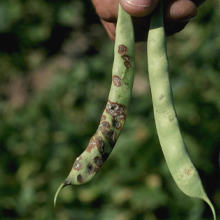
Bacterial blight is common in regions that experience prolonged periods of warm temperatures and high humidity. Two main types of bacterial blight will affect the leaves and pods of beans and peas: common blight and halo blight. Common blight bacteria exist on a variety of plants and weeds but only infect legume family crops. It appears as dry, brown spots or lesions that are surrounded by a yellow border. Halo blight lesions appear on the undersides of leaves and have a pale-colored halo around each spot.

EARLY BLIGHT
This common fungal disease infects tomatoes, eggplants, potatoes, and weeds belonging to the nightshade family. Peppers are not susceptible to it. It usually doesn’t kill plants but weakened plants will produce smaller and damaged fruits. Look for brown leaf spots with concentric rings and yellow halos, starting on oldest leaves first. With time, the spots enlarge and spread, and the leaves turn yellow and may fall off. Stems may have sunken spots or dark, leathery lesions. A dark, sunken spot with concentric circles may appear on the stem end of eggplant or tomato fruits.

SEPTORIA LEAF SPOT
Septoria leaf spot is a disease that affects the leaves and some fruits of plants. It most commonly infects celery, tomatoes, winter squash, and pumpkin plants, although other members of their respective plant families can be infected by the fungus. This disease is especially prevalent during prolonged periods of warm, wet weather. The spores are spread by splashing water or rain. On nightshade crops like tomatoes, look for small, brown spots with yellow halos on leaves and stems, starting on the lowest leaves first. On cucumbers and melons, look for small, water-soaked leaf spots that are brown or white. Infected fruits have small, white, raised spots.
POLLINATION ISSUES – Here are some pollination-related issues that gardeners most frequently encounter and ways to solve them:

CORN
If your corn patch wasn’t very productive last year or the cobs were missing a lot of kernels, chances are the plants were arranged in single or double rows rather than being planted in multirow blocks. At pollination time, corn plants send up tassels with pollen-containing anthers attached to them. The silks, which are part of the female flowers, are wind pollinated. When conditions are right, the pollen grains are released from the anthers and drop onto the silks below. The best pollination rates occur within block plantings rather than individual rows, because the close proximity within a block provides the pollen with many more “targets.
NIGHTSHADE FAMILY
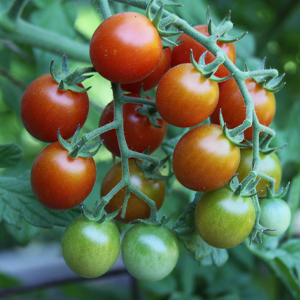
Tomato, pepper, and eggplant flowers are self-pollinating, but if the plants aren’t producing fruits, there are some simple methods help them out. To move the pollen within the blossoms, consider shaking or flicking them. Some gardeners use a battery-operated toothbrush to vibrate the flower stalks, which mimics bee pollination activities. These crops are pollinated naturally by bumblebees who use “buzz pollination” to knock the pollen loose and fertilize the flowers. Add flowers to your garden that are loved by bumblebees.
CURCURBITS
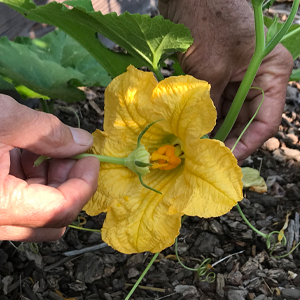
It’s not unusual for members of the cucurbit family (cucumbers, melons, pumpkins, and squash) to experience pollination-related problems. In these cases, the plants are growing well and blooming, but they aren’t producing any fruit. If this is happening to you, there might be a lack of pollinators. Attract them by planting some annual flowers in your veggie garden. In addition, sometimes cucurbit plants go through a period where they only produce flowers of one sex. The good news is that with time, more flowers will arrive of both genders. And lastly, sometimes plants don’t develop female flowers at all when the weather is excessively hot or cold. It can also result from repeated applications of nitrogen fertilizers.

BLOSSOM END ROT
Blossom-end rot is most easily recognized by the presence of a sunken, brown bottom tip on the developing fruits of tomatoes and zucchinis, but it also can occur on other cropssuch as melons, squash, eggplants, and peppers. The underlying problem is a calcium deficiency within the developing fruits. The primary causes are hot, dry conditions and irregular watering. For fruits to develop normally, plant roots need to be able to transport calcium from the soil into the plants and up to the fruits. To do that, the roots require moisture. Overuse of high nitrogen fertilizers also causes blossom-end rot because they promote leafy growth, which robs calcium from the fruits. You might think that applying calcium to your soil is the answer, but if the soil around the plants isn’t watered regularly, there is no way for the calcium to get into the plants through the roots.
Foliar applications of calcium won’t help either because it isn’t able to move from the leaves to the fruits. While blossom-end rot can affect nearly every variety of tomato, it impacts elongated plum tomatoes the most. Cherry tomatoes are typically not affected by it at all.
STRATEGIES Place mulch around the base of susceptible crops to help the soil retain moisture. Avoid overfeeding your plants with high-nitrogen fertilizers. Use shade cloth during excessive heat to shelter susceptible plants from the intensity of the sun.
Publisher : Cool Springs Press (February 7, 2023)
Language : English
Paperback : 224 pages
ISBN-10 : 0760377480
ISBN-13 : 978-0760377482
Item Weight : 1.75 pounds
Dimensions : 8 x 0.8 x 9.95 inches






Reviews
There are no reviews yet.